Social Outreach
Green campus initiatives, NSS, NCC and community engagement led by students and departments.
People | Planet | Purpose
From Green Campus to Impact Campus
Sustainability is not a project at Jai Hind. It is a way of thinking, learning and creating impact.
At Jai Hind College, sustainability extends beyond the physical campus. It connects environmental responsibility with social equity, community engagement, innovation, entrepreneurship, responsible citizenship and the future of work.
Our journey is therefore evolving from a Green Campus to an Impact Campus—a campus where ideas translate into action, students become changemakers, and institutional practices create measurable value for people, planet and society.

Planet
Impact Campus

Jai Hind’s commitment to environmental sustainability is embedded in both infrastructure and student action.
The College has installed 120 KW of solar capacity across its two buildings, complemented by energy-efficient lighting and other energy-conservation measures. Environmental, Energy and Green Audits form part of the College’s quality framework, creating a culture of measurement, review and continuous improvement.
Our sustainability practices extend across
- 120 KW solar energy infrastructure
- Green, Energy and Environment Audits
- Waste segregation, recycling and e-waste management
- Bio-composting and circular waste practices
- Water conservation and rainwater harvesting
- Plastic-reduction initiatives
- Energy-efficient lighting
- Green landscaping and biodiversity awareness
- Reduced automobile movement and promotion of public transport
- Student-led environmental campaigns
From laboratory waste converted into compost to e-waste collected through student initiatives, Jai Hind encourages a shift from “waste disposal” to “resource recovery.” The Department of Botany, for example, has demonstrated vermicomposting, Bokashi composting and soil-bacteria composting to convert biological waste into manure for campus plants.
Green Club | Nature Club | Environmental Action
The Green Club transforms environmental awareness into student action through initiatives such as Plantonate, encouraging plant donation, medicinal and ornamental planting and a deeper relationship with nature. The Nature Club has complemented this through nature trails, conservation awareness, plantation and environmental education.
Innovation for a Circular Future
Through Enactus Jai Hind College, sustainability meets social entrepreneurship.
Project Green Tee transformed discarded PET bottles into garments while creating livelihood opportunities for women. The initiative reports 10,000+ bottles recycled, 1,100+ T-shirts manufactured and 25+ women directly empowered, demonstrating how environmental challenges can become opportunities for circular enterprise and social inclusion.
10,000+
PET bottles recycled
1,100+
T-shirts manufactured
25+
Women directly empowered
Project Ekta addresses textile waste through upcycling, while student innovation initiatives continue to explore the intersection of sustainability, technology and enterprise.

People
Sustainability Begins with People
A sustainable institution is not only environmentally responsible. It is inclusive, safe, equitable and socially conscious.
At Jai Hind, this dimension is advanced through NSS, Extension, CSR, Rotaract, Outreach, the Women’s Development Cell, Wellness initiatives and student-led community engagement.
NSS | Service as Learning
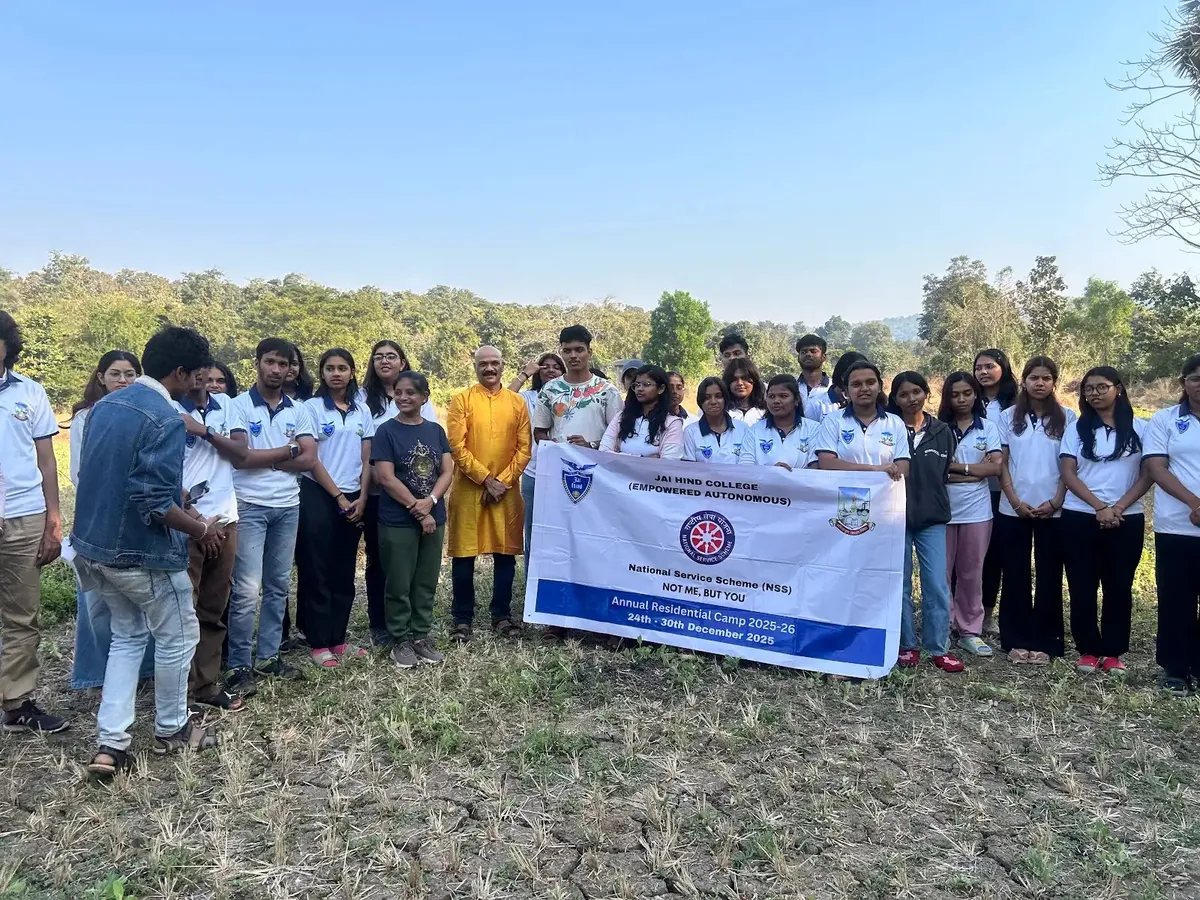
The NSS connects classroom learning with community realities through civic engagement, cleanliness initiatives, blood donation, health awareness, gender equality, road safety, anti-tobacco campaigns, NGO partnerships and residential community camps.
The College’s Extension Cell further enables students to undertake structured community work and sensitisation initiatives, making service an integral part of education.
WDC | Gender Equity as Social Sustainability
The Women’s Development Cell (WDC) is an important pillar of Jai Hind’s People agenda.
Its work extends beyond awareness programmes to women’s health, dignity, confidence, leadership and gender equity. Initiatives address issues including cervical cancer, first aid, nutrition and anaemia, while Nari Mukti Divas creates a platform for women’s voices, achievements and leadership through dialogue, performance and creative expression.
International Women’s Day is institutionally recognised through the WDC, placing gender equity within the College’s wider framework of institutional values and social responsibility.
At Jai Hind, gender equity is not an annual event. It is part of building a sustainable society.
Wellness | Inclusion | Belonging
The College’s Wellness ecosystem adds another dimension to social sustainability by supporting mental, emotional and physical wellbeing and creating spaces for students to seek professional and peer support.
Because a sustainable future must also be a healthy, inclusive and humane future.

Purpose
Turning Ideas into Impact
Jai Hind’s sustainability vision is powered by innovation and entrepreneurship.
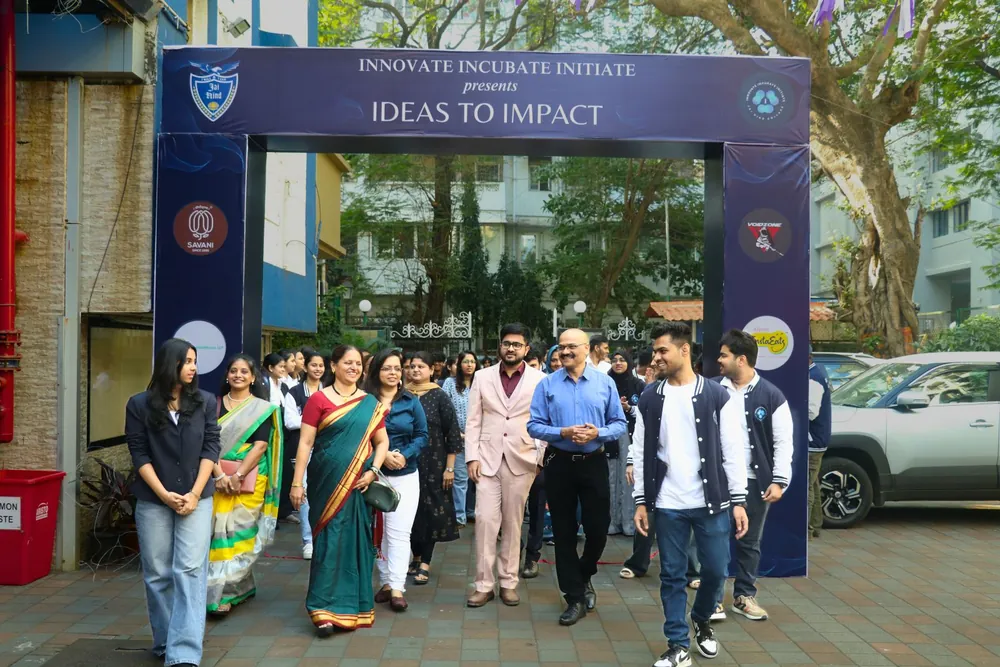
The Entrepreneurship Cell & Skill Hub, Incubator & Accelerator Centre, Enactus, Institute Innovation Council and academic departments create pathways from idea → experimentation → enterprise → impact.
The Incubator & Accelerator Centre provides mentoring, co-working infrastructure, entrepreneurship programmes and investor-facing opportunities, while the Entrepreneurship Cell works towards developing job creators rather than merely job seekers.
The College’s partnership with the Wadhwani Foundation further supports entrepreneurial learning from ideation to prototype and early customers.
Impact Entrepreneurship
At Jai Hind, entrepreneurship is increasingly understood through a wider lens:
Can innovation solve a social problem?
Can technology enable inclusion?
Can waste become a resource?
Can a student idea become a sustainable enterprise?
This is where innovation meets purpose.
Green Club
Growing a Culture of Environmental Action
The Green Club at Jai Hind College transforms environmental awareness into everyday action. Through student-led initiatives such as Plantonate, tree and plant adoption, plantation drives, nature awareness activities, waste reduction, recycling and environmental sensitisation, the Club encourages students to take ownership of the campus and its ecological footprint.
From nurturing plants and promoting biodiversity to creating awareness about responsible consumption and sustainable living, the Green Club makes sustainability visible, participatory and student-driven.
Plant. Protect. Participate.
Small actions. Sustainable habits. Collective impact.
Responsible Tourism
Travel. Transform. Sustain.
Sustainability also finds a distinctive expression through Jai Hind’s Travel & Tourism Management programme.
The Department’s annual World Tourism Day initiatives bring together students, researchers, industry leaders and policymakers around themes of responsible tourism, inclusion, community, sustainability and the Sustainable Development Goals. The programme’s World Tourism Day symposium explicitly connects tourism with the SDGs, while earlier Tourism Conclaves have addressed inclusive tourism and participation of persons with disabilities.
Tourism at Jai Hind is positioned not simply as travel, but as a force for:
- Responsible destinations
- Inclusive experiences
- Community livelihoods
- Heritage conservation
- Environmental stewardship
- Sustainable economic growth
E-Waste Drive
Turning Waste into Responsibility
Jai Hind College conducts E-Waste Drives to encourage responsible disposal and recycling of electronic waste. Students and the wider College community are sensitised to the environmental hazards of improper e-waste disposal and encouraged to collect, segregate and channel discarded electronic items for responsible recycling.
Reduce. Reuse. Recycle. Reimagine.
On the ground
Outreach in Action
Green campus projects, national service and cadet training.

Green Campus
Project Green Tee
Enactus Jai Hind College turned discarded PET bottles into garments while creating livelihood opportunities for women.

Photos to be supplied
National Service Scheme
NSS Outreach
To be supplied
NSS activities will be listed here.
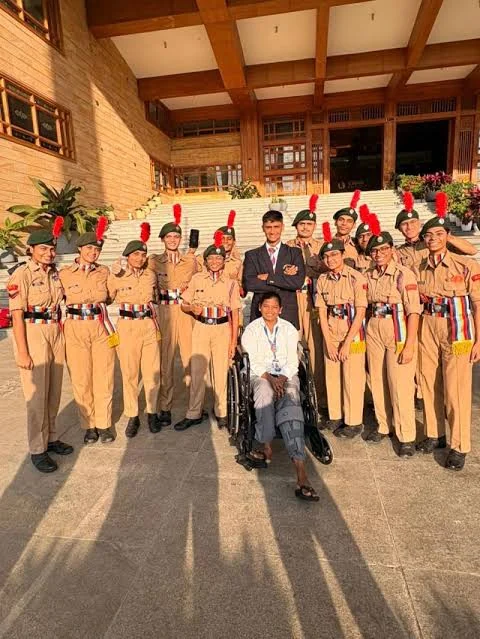
National Cadet Corps
NCC
NCC cadets train in drill, camps and national service, and take part in community and outreach activities.
Beyond the classroom
Extension Activities
The Disha Initiative, the Community Engagement Programme and department-led experiential learning.
01
Disha Initiative
Details to be supplied
02
Community Engagement Programme (CEP)
Students work with community partners through the Community Engagement Programme.
03
Experiential Learning
Outreach events and experiential learning organised by departments.
Institutional commitments
Sustainability on Record

Institutional
SDG Profile
The SDG profile will be published here.
To be supplied
National mission
Swachh Bharat
Swachh Bharat drives, dates, participation and photos.
To be supplied