
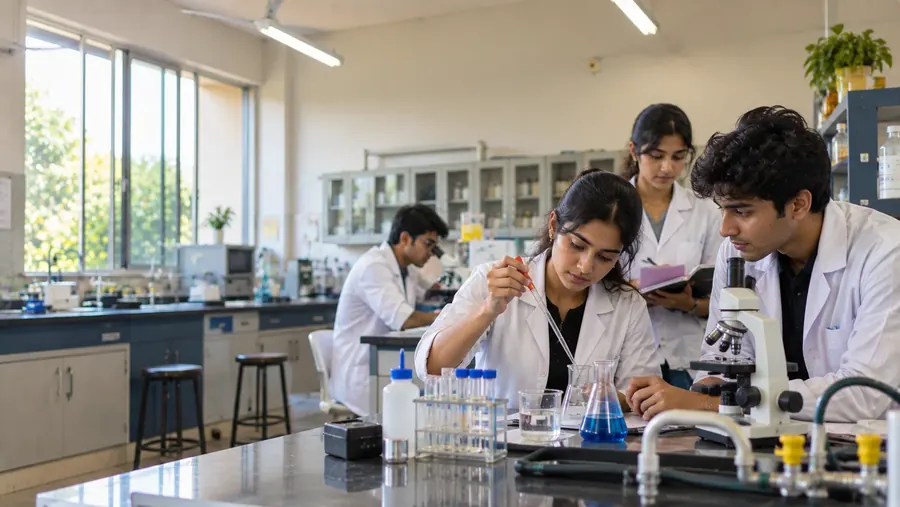
Biotechnology (B.Sc.)
Decoding Life, Designing the Future
Science & Technology · Self-Financed
About the Department
Established in 2002, the Department of Biotechnology at Jai Hind College is committed to providing quality education and fostering scientific excellence through an interdisciplinary and research-oriented approach. The department offers a comprehensive undergraduate programme that integrates fundamental biological sciences with emerging and advanced areas of biotechnology, preparing students to meet the evolving challenges of science, healthcare, industry, and society.
The Bachelor of Science (B.Sc.) programme in Biotechnology encompasses a diverse range of subjects, including Genetics, Molecular Biology, Biochemistry, Immunology, Cell Biology, Bioinformatics, Genetic Engineering, Microbiology, Stem Cell Technology, Tissue Culture, Nanobiotechnology, Neurobiology, Developmental Biology, Cancer Biology, HIV, Autoimmunity, Biostatistics, Nutrition and Dietetics, Bioethics, Intellectual Property Rights (IPR), Biosafety, Research Methodology, and Entrepreneurship.
Under the autonomous framework of the institution, and NEP guidelines, the department continuously strives to enrich the curriculum by incorporating contemporary scientific developments, innovative teaching methodologies, outcome-based learning, and interdisciplinary projects. Emphasis is placed on experiential learning through well-equipped laboratory sessions, hands-on training workshops, seminars, scientific conferences, research paper presentations, industrial visits, and interactions with eminent academicians, scientists, and industry experts.
The department encourages students to develop scientific aptitude, critical thinking, creativity, research skills, and problem-solving abilities. Opportunities for internships, research projects, industry exposure, and participation in scientific and academic activities enable students to bridge the gap between theoretical knowledge and practical applications.
With a strong focus on holistic development, the department nurtures competent, innovative, and socially responsible graduates equipped to pursue higher education, research careers, employment in biotechnology and allied industries, or entrepreneurial ventures. Through its commitment to academic excellence, research, innovation, and continuous learning, the Department of Biotechnology endeavours to shape the next generation of skilled biotechnologists and contribute meaningfully to scientific and societal advancement.
The alumni of the department are well placed in the Food, Pharmaceutical and FMCG industry and allied sectors. Many student alumni are at prominent positions in Research institutes in India and all across the globe.
Decoding Life, Designing the Future
- Department Department of Biotechnology
- Category Self-Financed
- Programmes 1
- Faculty 6
Follow the department
Study here
Programmes & Eligibility
BSc Biotechnology
Admission eligibility
BSc Biotechnology: Standard XII Science with Biology.
Our people
Faculty
Select a faculty member to see their qualifications and profile.
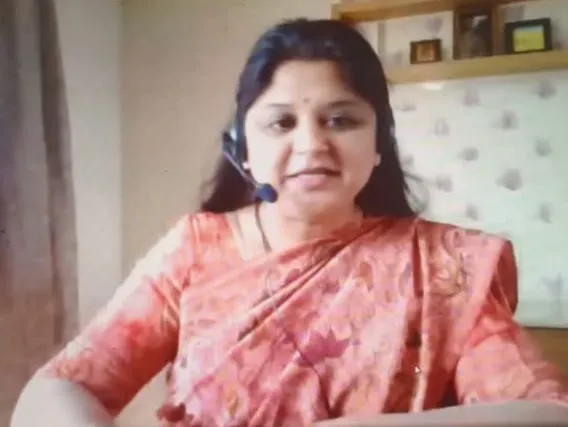
Dr. Kruti Pandya
Assistant Professor
- Ph.D. Biochemistry
- SET
- B.Ed.
Joint Coordinator, Department of Biotechnology, Jai Hind College.
Specialization: Biochemistry, Biotechnology, Molecular Biology, Immunology
Email: kruti.pandya@aihindcollege.edu.in
Dr. Kruti Pandya holds a Ph.D. in Biochemistry and is an accomplished academician with over 25 years of teaching experience in higher education. She has made significant contributions to teaching, research, and academic leadership in the field of biotechnology.
Dr. Pandya has presented her research at many national and international conferences and research conventions. She has published more than 20 papers in national and international peer-reviewed journals. Her research experience includes dry lab (in silico) studies, with more than 10 nucleotide/protein sequences submitted to reputed international databases such as NCBI, DDBJ, EMBL, and other open-access repositories. She has actively guided over 100 students on research projects which have been presented at Avishkar, Xplore, Jjigyassa and many more. She has won at several competitions and has mentored students’ teams who have won at National and International platforms. She guided student team who won Australia National University Case study cohort and won first position. Students mentored by her has won time and again at state level Microbiolympiad competition and zonal level Aavishkar research convention. Dr. Pandya is the Faculty Convener of the Institute Innovation Council (IIC), she continues to promote research, innovation, and entrepreneurial mindset among students and faculty. She has mentored many student groups and has participated and presented innovative ideas and products at prestigious platforms.
She has been actively associated with several professional, educational, and research institutions. Dr. Pandya serves as a Member of the Research Advisory Committee (RAC) Member of the Board of Studies (BOS).
In addition, she has contributed as a consultant in collaborative industry–academia projects and has been invited as a trainer, mentor, external examiner, and judge for numerous research and entrepreneurship competitions. She has guided students in intra- and inter-collegiate research competitions, fostering a strong research culture among learners.
Research publications: – Ruqayya M., Shiza S and Kruti P., 2021 Molecular and Insilco approach towards identification of a pigment producing soil isolate, International Journal of All Research Education and Scientific Methods (IJARESM), Volume 9 (5), Impact Factor: 7.429, ISSN: 2455-6211 – Pandya K., Naik A., Singh A. 2016. Comparative study of buffering capacity of an innovative cymbopogan flavoured herbal mouth wash against commercial chemical mouth wash in oral health. International Journal of Pharma Drugs Analysis. ISSN-2348-8948. 10, (4)., 480-485. – Mansawala R. M., Shiza S., Pandya K. 2016. Preliminary study and characterization of a prodigiosin producing soil bacteria and applications of biopigment in natural cosmetics. International J of Current Advanced Research. ISSN-2319-6475(E) 2319-6505(P. 5(12)544-1547. – Pandya K. and Phadke M. S. 2015. Analysis of diesel biodegradation using gas chromatography mass spectroscopy (GCMS). Bionanofrontier: Journal of science and Technology: Volume (8), 3, 67-70; ISSN 0974-0678. E journal: Print ISSN:0974-0678, Online:2320-9593 – Pandya K, Zaveri M., Kanojia N., and Sidpurwala U. 2014. Study of industrial applications of bacterial exoprotease. International Journal of Biotechnology and Biosciences. ISSN NO – 2231-0304. – Pandya K. Lakdawala A., Jones M., Kotwal U. 2014. Invitro biodegradation of cat hair by bacterial keratinase. International Journal of Environmental Sciences. ISSN NO-2249-2127. – Pandya K. and Phadke M.S. 2013. Partial purification and process optimization of bacterial lipases. International Journal of Environmental Sciences. ISSN NO-2249-2127. 2(2), 80-84. – Pandya K. and Phadke M.S. 2012. Isolation and characterization of lipase producing bacteria from spoiled fruits and vegetables. International journal of Biotechnology and Biosciences. ISSN NO-2231-0304,2(4),306-312.
Research Projects: – UGC Minor Research Project Sanctioned 2015- PCR based gene sequencing for a Triacylglycerol esterase – BCUD Minor Research Project Completed 2012-13- Isolation and study of microbial lipases from oil spill areas around Mumbai
Gene Sequences deposited at NCBI: – Pandya, K., Chawla,S., Sagar,P., Nathani,M. and Singh,P. 2023. Brachybacterium paraconglomeratum strain PPMS3 16S ribosomal RNA gene, partial sequence. GenBank: OQ520026.1. https://www.ncbi.nlm.nih.gov/nuccore/OQ520026.1 – Pandya, K., Chawla,S., Sagar,P., Nathani,M. and Singh,P. 2023. Brachybacterium paraconglomeratum strain PPMS2 16S ribosomal RNA gene, partial sequence GenBank: OQ520025.1. https://www.ncbi.nlm.nih.gov/nuccore/OQ520025.1 – Pandya, K., Chawla,S., Sagar,P., Nathani,M. and Singh,P. 2023. Brachybacterium paraconglomeratum strain PPMS1 16S ribosomal RNA gene, partial sequence GenBank: OQ520024.1. https://www.ncbi.nlm.nih.gov/nuccore/OQ520024.1 – Pandya K, Vibhav, Viraj, Ashwin, Sanjay, Hrishikesh. 2018 Cultured Prokaryotic 16srRNA seq for Bioluminiscent Photobacterium leiognathi. MH057770. https://www.ncbi.nlm.nih.gov/nuccore/MH057770 – Pandya K., Ruqayya M., Shiza S. 2017. Serratia marcescens strain RSK1 16S ribosomal RNA gene partial sequence. KY967712.1. https://www.ncbi.nlm.nih.gov/nuccore/KY967712.1 – Pandya K, Phadke M. 2015. Pseudomonas aeruginosa strain KP5 16S ribosomal RNA gene, partial sequence. KU850956. https://www.ncbi.nlm.nih.gov/nuccore/KU850956 – Pandya K, Phadke M. 2015. Stenotrophomonas acidaminiphila strain KP2 16S ribosomal RNA gene, partial sequence. KU850955. https://www.ncbi.nlm.nih.gov/nuccore/KU850955 – Pandya K, Phadke M. 2015. Pseudomonas aeruginosa strain KP5 lipase (lipA) gene, complete cds. KX065448.1. https://www.ncbi.nlm.nih.gov/nuccore/KX065448.1 – Pandya K, Phadke M. 2015. Staphylococcus aureus strain KP3 lipase gene, complete cds. KX212081.1. https://www.ncbi.nlm.nih.gov/nuccore/KX212081.1
Scientific Poster presentation: – Pandya Kruti and Phadke Madhavi. Study of Industrial Applications of bacterial lipases. (AVISHKAR, Kalina, 2014) – Pandya Kruti and Phadke Madhavi. Partial purification, immobilization and Insilco analysis of bacterial lipase (Konark research meet, SIES, 2013) – Pandya Kruti and Phadke Madhavi. Insilco Analysis and identification of lipase producing acidophilic bacteria from waste disposal site in Central Mumbai suburb (NMIMS, 2013)
Reviewer: Reviewer for Xplore Research Journal, St. Xavier’s College, 2021-2023 Subject Expert for Ph.D student at Navrachana University. 2022
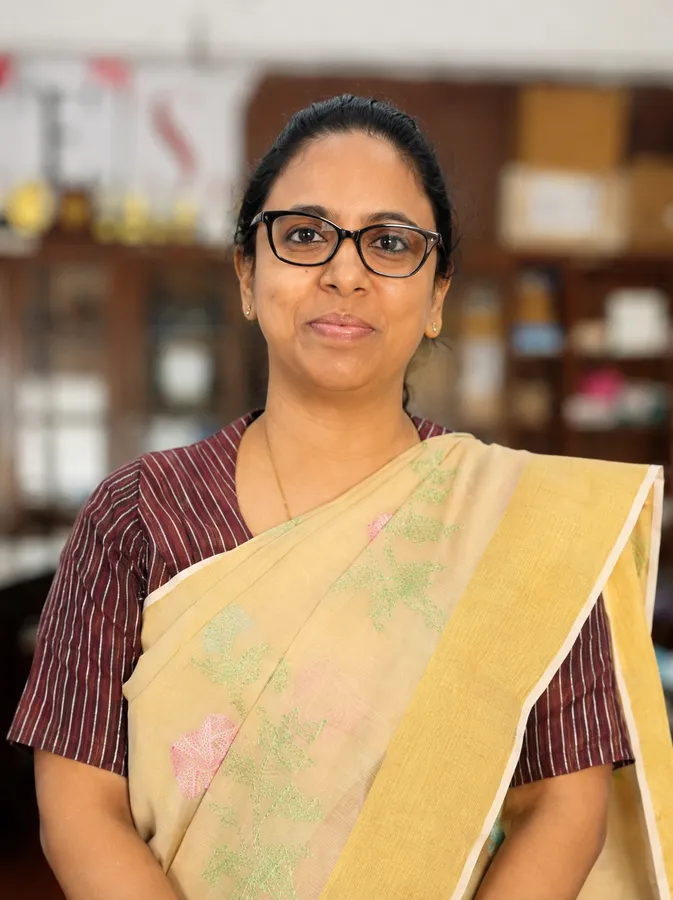
Dr. Nissey Sunil
Assistant Professor
- Ph.D. Bioanalytical Sciences
- NET
Joint Coordinator, Department of Biotechnology, Jai Hind College.
Specialization: Bioanalytical Sciences, Biochemistry, Microbiology, Biotechnology, Cell Biology and Molecular Biology
Email: nissey.sunil@jaihindcollege.edu.in
Dr. Nissey Sunil has been teaching at the department of Biotechnology for almost two decades. Mainly recognized by her students for her engaging, supportive teaching style and structured academic mentorship, she bridges the gap between academic theory and real-world execution. She earned her Ph.D. in Bioanalytical Sciences from the University of Mumbai. Her research focused on the biochemical and molecular characterization of probiotic organisms and the development of probiotic products. Before dedicating her career to academia in 2005, she worked within the research and development (R&D) sector of a corporate company following her research assistantship at a premier research institute. She successfully leverages this dual background to help her students navigate both scientific innovation and corporate industry landscapes. Her primary competencies and favorite areas of study include Cell and Molecular Biology, Genetics, Biochemistry, and Analytical Techniques. She has also driven academic research through funded projects such as by the University Grants Commission (UGC). Beyond regular classroom instruction, Dr. Sunil actively mentors students through undergraduate research projects, industrial visits, and competitive research meets. Alongside her administrative role as Joint Coordinator, she sits on the college’s Internal Quality Assurance Cell (IQAC) committee and acts as the Faculty Advisor for the student-led Green Club, driving local environmental and sustainability awareness campaigns.
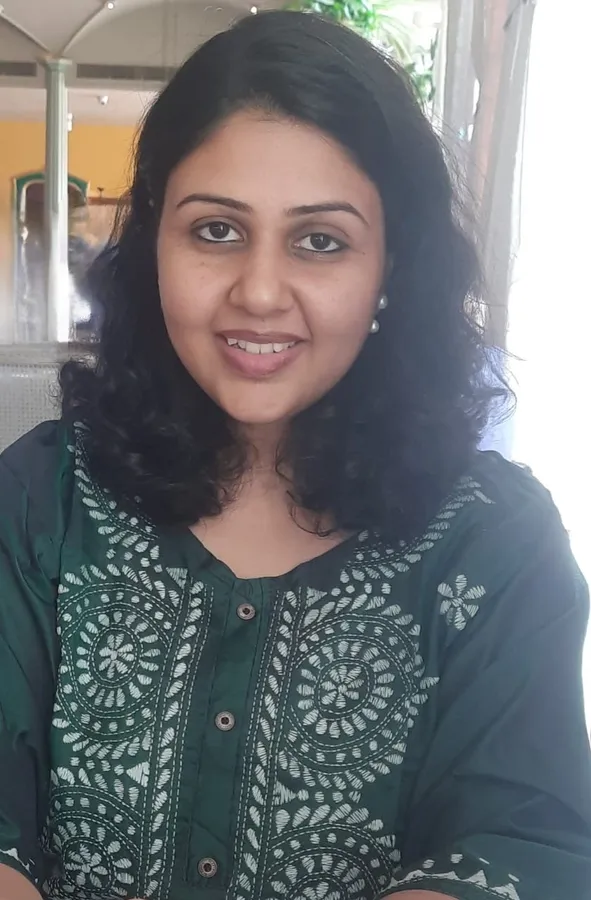
Dr. Monalisa Chakraborty
Assistant Professor
- Ph.D. Biotechnology
- RET
Specialization: Nanochemistry, Neurobiology, tissue culture techniques, polymer chemistry.
Email: Monalisa.chakraborty@jaihindcollege.edu.in
Dr. Monalisa Chakraborty is an accomplished researcher, academician, and mentor with extensive experience in the fields of biotechnology, nanotechnology, neurobiology, and tissue culture. Her research interests encompass nanomedicine, ethnopharmacology, plant and animal tissue culture, biopolymers, drug delivery systems, and in vivo experimentation using model organisms. She has over five years of wet-laboratory research experience, with expertise in clinical research data handling, interpretation, laboratory animal handling, and cell culture techniques. She has also undergone specialized training in Animal and Human Cell Line Culture at the Foundation for Advanced Education in the Sciences, National Institutes of Health (NIH), Bethesda, USA.
Dr. Chakraborty has made significant contributions to interdisciplinary research, particularly in green synthesis of nanoparticles, their antimicrobial and antidiabetic properties, nanomedicine, membrane biophysics, and wound-healing applications. She has published numerous research articles in reputed national and international peer-reviewed journals, including Springer’s Clinical Phytoscience and RSC Advances. Her research findings have contributed to the growing understanding of plant-mediated nanoparticle synthesis and its potential biomedical applications. She has also contributed a book chapter on “Homeopathic Nanomedicines and Their Effect on the Environment” in a Springer publication.
Beyond research, Dr. Chakraborty is actively involved in mentoring students in innovative research projects spanning biotechnology, nanotechnology, microbiology, and sustainable product development. She has served as a resource person for academic courses and workshops in biophysics, biostatistics, and research methodology. She has also conducted faculty development and training sessions on outcome-based education and NAAC accreditation processes.
Dr. Chakraborty has been invited as an external examiner for postgraduate and undergraduate biotechnology practical examinations at reputed Mumbai colleges and as a judge for research presentations and innovation competitions. She also serves as a reviewer for the international journal Clinical Phytoscience (Springer), reflecting her continued commitment to academic excellence, research innovation, and the development of scientific aptitude among students.
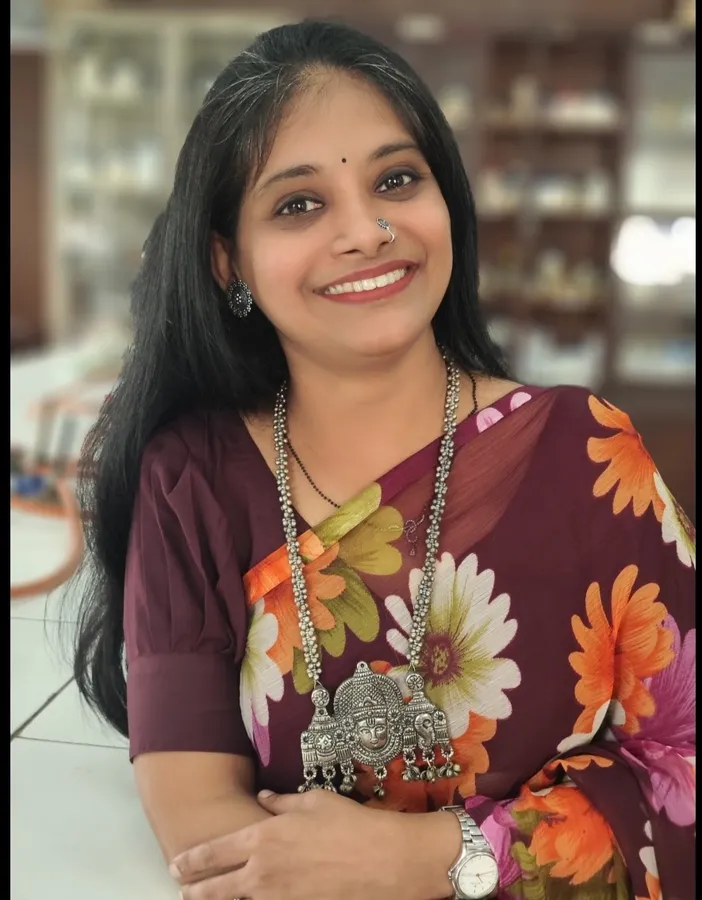
Ms. Vedika Bane
Assistant Professor
- MSc. Microbiology
- SET
Specialization: Microbiology, Medical Biotechnology, Food Technology, Biostatistics.
Email: vedika.bane@jaihindcollege.edu.in
An experienced academic professional with over 10 years of teaching experience, actively involved in teaching, research, and academic activities. She demonstrates a keen interest in research in Microbiology, Food and Pharmaceutical Microbiology, and Applied Biotechnology. She strives to connect theoretical knowledge with practical applications, encourage active participation, and nurture scientific thinking. She has mentored many student groups, who have represented and won prizes at various college and National level research meets. She is a part of the college Examination Committee and an active member of college green club.
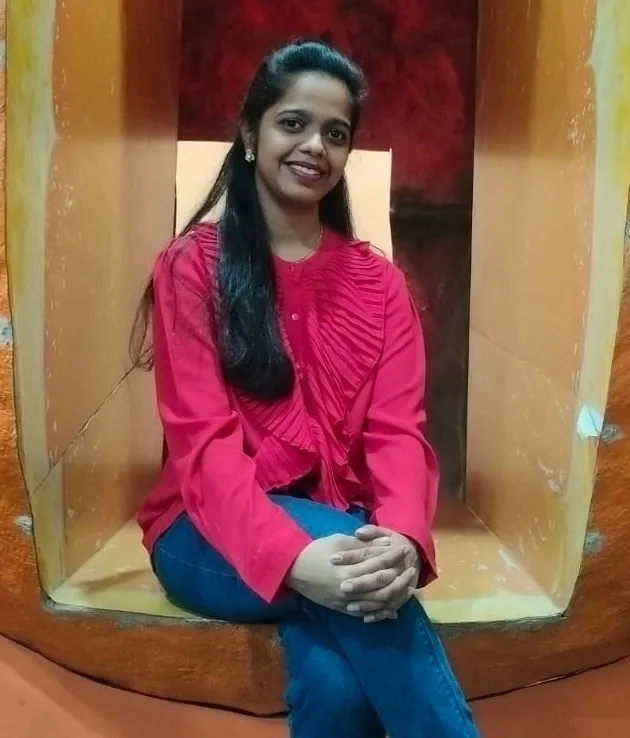
Ms. Ruqayya Manasawala
Assistant Professor
- MSc. Biotechnology
- SET Qualified
Specialization: Bioinformatics, Cell and Developmental Biology, Bio-Analytical Techniques and Phytochemistry.
Email: ruqayya.manasawala@jaihindcollege.edu.in
Academically driven and dedicated faculty with over seven years of teaching experience, holding a Master’s degree in Biotechnology and SET qualification. Possessing specialized expertise in Bioinformatics, Cell and Developmental Biology, Phytochemistry, and Bioanalytical Techniques. Demonstrates a strong commitment to academic excellence, scientific research, and innovative teaching methodologies. Her doctoral research focused on analysis of plant flavonoids, its optimal extraction and antioxidant activity. She has about 6 scholarly publications in Web of Science, Scopus and peer-reviewed journals to her credit and has presented posters at National and International Conferences. She has previously worked at TIFR, Mumbai as research project fellow. She is passionate about fostering interdisciplinary learning by integrating advanced analytical techniques, contemporary scientific knowledge, and research-oriented approaches into teaching and has been actively involved in the MentX program of Young Academy of India (YAI). Her research spans insilico analysis with bacterial sequences submitted in NCBI and has guided various student projects for Inter-University and National level platforms.
Research Publications: 1. Manasawala Ruqayya and Chachad Devangi. (2026). Multi-assay assessment of antioxidant capacity in species of the Papilionaceae subfamily. Vegetos. https://doi.org/10.1007/s42535-026-01691-x 2. Manasawala, Ruqayya, Chachad, Devangi. (2026). Comparative phytochemical and antioxidant evaluation of Cassia and Senna species using hot and cold maceration methods. J. Indian bot. Soc., 106 (2): 190-198 Doi: 10.61289/jibs2026.02.02.0521 3. Manasawala Ruqayya and Chachad Devangi., (2024) Exploring disparities in phytochemical properties of Clitoria ternatea L: marketed product versus fresh harvest, Research and Reviews in Plant Science Volume IV, Bhumi Publications. ISBN: 978-93-95847-08-7. 4. Shruti S., Soumyashree G., Ruqayya M., (2021) Insilico screening of prime PCOS biomarkers for identification of a potential model organism, International Journal of Scientific Research in Science and Technology (IJSRST), Volume 8, issue 6 (448-454), ISSN: 2395-6011. 5. Ruqayya M., Shiza S and Kruti P., (2021) Molecular and Insilco approach towards identification of a pigment producing soil isolate, International Journal of All Research Education and Scientific Methods (IJARESM), Volume 9 (5), Impact Factor: 7.429, ISSN: 2455-6211. 6. Ruqayya M., Shiza S and Kruti P., (2016) Preliminary study and characterization of a prodigiosin producing soil bacteria and applications of biopigment in natural cosmetics. IJCAR Vol 5 (12): 1544-1547. ISSN: 2319-6475. 7. Ruqayya M., Shiza S and Kruti P., 16S rRNA partial gene sequence for Serratia marcescens strain RSK submitted to GenBank on 21-04-2017. Accession No: KY967712.
Research Posters and Oral Presentation: – Ruqayya M, Devangi C, November 2025. Phytochemical and Antioxidant Profiling of Calliandra haematocephala Hassk. Flowers. International conference on Frontiers in Science and Technology, ICFST 2025 organized by R.P Gogate College, Ratnagiri. – Ruqayya M, Devangi C, December 2023. Assessment of Cassia species as UV blocking agents: A screening study. Final round of 18 th Intercollegiate Research Convention Aavishkar, organized by University of Mumbai, KET Vaze College, Mulund, Mumbai. – Ruqayya M, Devangi C, November 2023. Exploring the phytochemical and anti-oxidant potential of Cassia flowers. XLVI All India Botanical Society Conference held at Sant Gadge Baba Amravati University, Amravati. – Ruqayya M, Ashika S, Shiza S, Shalini RC, Mayuri G, Bhumika W, Supriya G, Ira V, January 2019. Probing the properties of spent tea waste and its potential in development of a preservative film. Symbiotek 2019, organized by Department of Bioscience and Bioengineering, IIT-Bombay. – Ruqayya M, Ashika S, Shiza S, Shalini RC, Mayuri G, Bhumika W, Supriya G, Ira V, December 2018. Valorization of vegetable waste to develop alternate bacteriological media. International Conference on Present Day Biology, organized by Department of Biochemistry-Biotechnology, St. Xavier’s College (Autonomous), Ahmedabad. – Ruqayya M, Shiza S, Kruti P, February 2017. Molecular Characterization and study of industrial applications of prodigiosin producing soil prokaryote. Jigyaasa Research Meet organized by Department of Biotechnology, KC College, Mumbai. – Ruqayya M, Shiza S, Kruti P, January 2017. Evaluation of efficacy of a promising antibacterial pigment Prodigiosin as a natural colorant in the field of cosmetics. Konark Research Meet organized by VES College of Arts, Science and Commerce, Mumbai. – Ruqayya M, Shiza S, Kruti P, December 2016. Preliminary characterization of prodigiosin producing soil bacteria and application of pigment in cosmetics. Avishkar Research Convention held by University of Mumbai at Bhavans Hazarimal Somani College, Mumbai. – Ruqayya M, Shiza S, Kruti P, September 2016. Preliminary study and characterization of a prodigiosin producing soil bacteria and applications of biopigment in natural cosmetics. PICASSA III organized by ISCC and Department of Cosmetics and Perfumery, KET’s VG Vaze College, Mumbai.
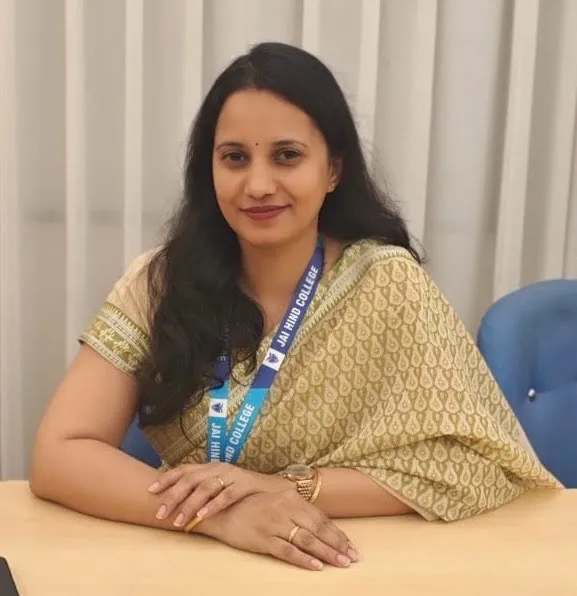
Dr. Jyoti Yadav
Assistant Professor
- Ph.D. Microbiology
- RET
- CUCET
Specialization: Dairy Microbiology, Food & Fermentation Technology, Aflatoxin Mitigation
Email: jyoti.yadav@jaihindcollege.edu.in
Dr. Jyoti is an academic and researcher. She holds a Ph.D. in Microbiology from Mohanlal Sukhadia University, Udaipur. Her research primarily focuses on dairy microbiology, bacterial diversity, pathogen surveillance, shelf-life assessment, probiotic bioprospecting, and aflatoxin mitigation. She possesses 5 years of academic teaching experience in biotechnology and microbiology at undergraduate and postgraduate level alongside expertise in molecular biology techniques, microbial cell culture, and antimicrobial susceptibility testing. She has worked previously as research trainee at IIT Indore. She has authored 8 scholarly publications, including Scopus indexed & peer-reviewed journal articles and 3 book chapters. She was Awarded as Best Author by Wiley for one of the top downloaded articles in 2021. She has also contributed in G-20 University Connect Souvenir. She has participated in the Global Initiative of Academic Networks (GIAN) course on “Microbial Technology”. She has been a member of Applied Microbiology International (AMI).
Where they are now
Illustrious Alumni

Sanjana Kuruwa
2005-2006
Head IP and Regulatory, HaystackAnalytics Pvt. Ltd.
Vahbiz Jokhi
2006-2007
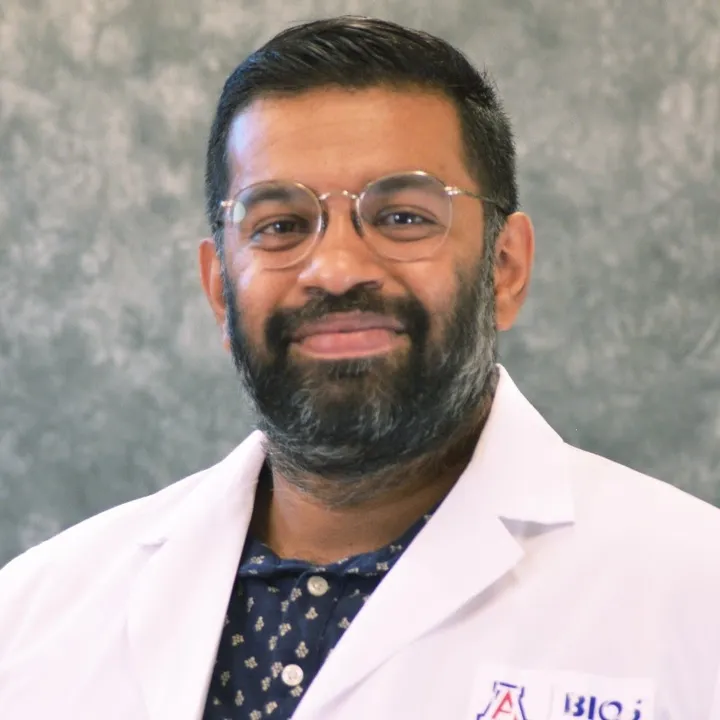
Lucas D’Souza
2008-2009
Immunology research, Arizona, US

Krishma Shah
Founder, Clinibiz, Appeared in Forbes 30 under 30.
Dhaval Mehta
Co-founder Allianz Bioinnovation

Zenia Motiwala
Postdoctoral fellow at Bridge Institute, UCL, LA, USA

Ambreen Sayyed
Sr Scientist at Eli Lilly and Co., USA
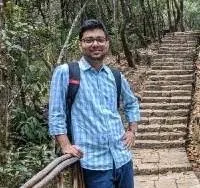
Nikhil Bardeskar
Postdoctoral Research Scholar, NC State University, USA
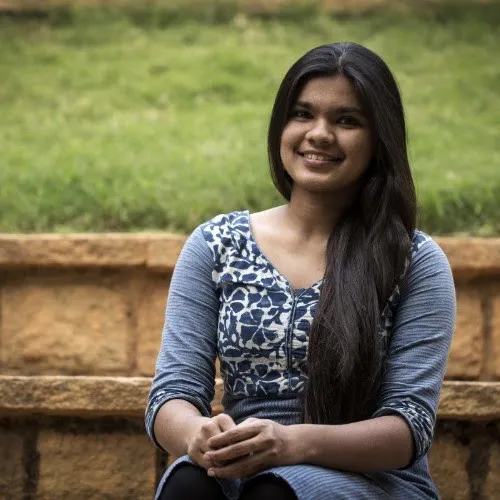
Dr. Amruta Naik
2015-16
Cell Biology, Postdoctoral fellow, Hungary
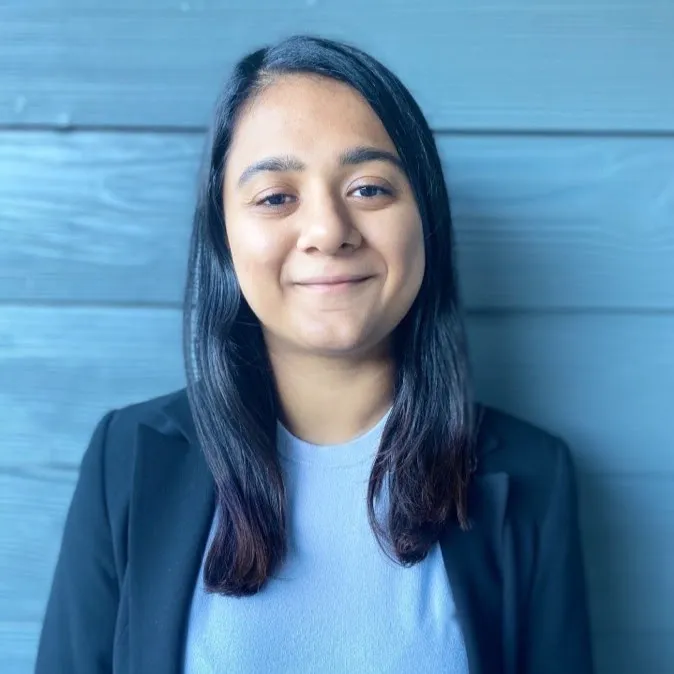
Srika Amin
2017-18
Genetic Counsellor, Children’s National Hospital, US.

Chrisanne Dsouza
2016-17
Post doctoral research, Karolinska Institute
Ashika Singh
2016-17
PhD Biomedical engineering, University of Delaware.

Aditi Pathak
2020-21
Pursuing Phd at NCBS
RK
Rashi Kochhar
2005-2006
Harvard
DW
Diana Writer
2005-2006
AL
Ashish Lath
2006-2007
UK
Urvazi Kotwal
2014-15
Theater, Mumbai
S
Sannidh
2014-15
Bombay Bandook Band, Singer, Mumbai
HP
Hemelta Pereira
Marketing Manager, Mumbai
AV
Aaron Veigus
2020-21
Cancer studies, Bioinformatics, Post doctoral research, Germany
QK
Quratulen Khan
2020-21
Pursuing Phd at IIT, Mumbai
RJ
Ronit Jain
2020-21
Pursuing Phd at NII, New Delhi
NP
Nilakshi Patel
2021-22
Pursuing Phd at ACTREC
AK
Ashandeep Kaur
Pursuing Phd at Griffith University, Australia
DP
Deeksha Poojari
Employed, HiMedia Lab Pvt. Ltd
SJ
Sarvesh Joshi
Employed, Reliance Life Sciences
SK
Sayali Kochey
Employed, Serum Institute of India
SS
Sakshi Shigvan
2022-23
Pursuing Phd at NCBS
SS
Saloni Shirodkar
2022-23
MS, University of Munich, Germany
AM
Ali Merchant
2022-23
Employed TCS
RT
Rashi Tiwari
2022-23
MS, University of California, USA
RS
Rashi Somani
2023-24
MS, University of Bonn, Germany
PC
Pratham Chaubal
2023-24
MS, Edinburgh, Scotland
AC
Arunima Chattopadhyay
2023-24
Ms, University of Vienna, Austria
LP
Lavanya Palkar
2023-24
MS, Edinburgh, Scotland
VK
Vansh Kulkarni
2024-25
MS, University of Groningen, Netherlands
KB
Krutika Barve
2024-25
DFRL, DRDO, Mysuru
NB
Nemi Bhayani
2024-25
MS, Glasglow
KJ
Krisna Jariwala
2024-25
MS, Genetic Counselling, Australia
DY
Divya Yadav
2024-25
IIM, Jammu, India
Every year
Department Events
Genaces
Brainchild of the S.Y. B.Sc. students of the 2007 -2008 batch, Genaces was started with the aim of inculcating the spirit of Science, Technology and contemporary world with essence of team work, fostering leadership qualities and providing organisers and participants a platform to showcase their creativity, imagination, innovation, management skills. This annual festival is organized by the students under the guidance of faculty. Through the organization of various events and competitions at Gences, students develop numerous soft skills.
Gene Talk -Biodebate
Inter Class annual Student Debate on contemporary Biotechnology and allied subject related
Ideathon – Innovative Idea
Providing a sustainable ecosystem to nurture innovative business and start-up ideas. Through this interactive bootcamp students get a platform to showcase their innovative business ideas related to Biotechnology, sustainability and allied fields. networking opportunities.
Ecopreneur
Sustainable innovation for promoting Entrepreneurship opportunities related to festival celebration
Bioexpression, Biotheater, Street play, Open Mike
Activities such as Bioexpression, Biotheater, and street plays provide Biotechnology students with creative platforms to communicate scientific concepts and create awareness about biotechnology and its applications. These activities encourage students to explore topics related to health, environmental sustainability, biodiversity, genetic engineering, and emerging biotechnological advancements through innovative performances. Participation enhances their creativity, teamwork, leadership, communication, and presentation skills. It also develops scientific awareness and the ability to convey complex scientific information to the general public in a simple and engaging manner. Overall, these activities promote scientific communication, social responsibility, and the holistic development of Biotechnology students.
Literature Review and Research Paper Presentation
Literature review and research paper presentation activities help Biotechnology students develop the ability to critically analyze and interpret scientific literature and recent research findings. These activities enhance their understanding of current advancements, emerging technologies, and research trends in various areas of biotechnology. Preparing and presenting research papers improves students’ scientific writing, communication, presentation, and analytical skills. It also encourages independent learning, critical thinking, and the identification of research gaps for future investigations. Overall, these activities strengthen research aptitude and prepare students for higher education, scientific research, and professional careers.
Industrial Visits and visits to premier research institutes, government organisations
Industrial visits and educational visits to premier research institutes, government organizations, and nature parks provide Biotechnology students with valuable exposure to real-world applications of biotechnology and sustainability practices. These visits help students understand industrial processes, advanced research facilities, environmental conservation strategies, biodiversity management, and sustainable resource utilization. Interaction with scientists, industry professionals, and environmental experts enhances their practical knowledge and awareness of current challenges in biotechnology and environmental sustainability. Such experiences encourage students to explore career opportunities, research prospects, and innovative solutions for environmental protection. Overall, these visits bridge the gap between classroom learning and practical applications while promoting scientific curiosity and environmental responsibility.
Alumni Meet
The Alumni Meet of the Department of Biotechnology is organized with the objective of strengthening the bond between alumni and the institution by providing a common platform for former students to reconnect with their classmates, faculty members, and the department. The event aims to facilitate the exchange of knowledge, experiences, and professional insights, while providing current students with valuable guidance regarding career opportunities in biotechnology, pharmaceuticals, healthcare, bioinformatics, research, and allied fields. It also encourages alumni to mentor students in higher education, internships, research projects, and career planning. Furthermore, the meet aims to strengthen networking opportunities, promote industry–academia interactions, and establish collaborations with industries and research organizations. The valuable suggestions and feedback from alumni will contribute towards enhancing the academic curriculum, research activities, and overall development of the department. The occasion also provides an opportunity to recognize and celebrate the achievements and contributions of alumni, thereby fostering a strong and lasting relationship between the alumni and their alma mater.
Alumni Talk
The alumni talk provides students of Biotechnology with valuable insights into career opportunities in various fields, including research, pharmaceuticals, healthcare, and the biotechnology industry. It helps students understand current industry trends, emerging technologies, and the skills required for professional growth. Alumni share their practical experiences, challenges, and achievements, inspiring students to explore higher education and research opportunities. The interaction also provides guidance on internships, placements, competitive examinations, and career planning. Overall, the alumni talk bridges the gap between academic learning and industry requirements while motivating students to achieve their professional goals.
Seminars and hands on training workshops, guest / speaker sessions on Contemporary topics
Seminars, hands-on training workshops, and guest speaker sessions on contemporary topics provide Biotechnology students with opportunities to enhance their theoretical knowledge and practical skills. These activities expose students to recent advancements, emerging technologies, and innovative research in various fields of biotechnology. Hands-on training enables students to gain practical experience with modern laboratory techniques, instruments, and research methodologies. Guest lectures by experts from academia and industry provide valuable insights into current trends, career opportunities, and industry requirements. Overall, these activities promote scientific thinking, research aptitude, technical competence, and professional development among students.
Scientific Conference, Participation in Research Meet
Participation in scientific conferences and research meets provides Biotechnology students with opportunities to explore recent advancements and emerging trends in various areas of biotechnology. These platforms encourage students to present their research work, exchange scientific ideas, and interact with eminent researchers, academicians, and industry experts. Such participation enhances their scientific knowledge, research aptitude, presentation skills, and critical thinking abilities. It also helps students develop professional networks and identify opportunities for higher studies, research projects, and collaborations. Overall, these activities foster a research-oriented attitude, innovation, and scientific excellence among students.
Upcoming events, seminars & conferences
Genaces 2026 – Intercollegiate Annual Department Festival
National Biosciences conference on Integrative Biology from Molecules to Ecosystem.
Workshop on Gel Electrophoresis, Sterility Assurance, Bacterial Endotoxin Test, HPLC, ELISA and others contemporary topics
Sci Tank
EcoPreneur
Ideathon
Gene Talk
Immunopreneur
Nutripreneur
Bioexpression/ Biotheater/ Street Play/ Open Mike
Seminars on Sustainability Governance, Organoids
Teacher Training Workshop on Repurposing drugs and Nanomedicine for cancer
Beyond the classroom
Industry Connect & Courses
MoUs & collaborations

- Agnihotra (2023, Three years) – Collaborative Research project between Department of Biotechnology, Jai Hind College and Institute of Vedic Studies. Faculty of the Department involved in providing consultation services for this sponsored project.
- TechResource (2026, Five years) – Collaboration between TechResource and Department of Biotechnology, Jai Hind College to jointly organise hands on training workshops and expert sessions, explore internship opportunities for students and bridge industry academia gap.
- ITCFSAN (2026, Five years) – Collaboration between ITCFSAN – a well known Training institute formed under FSSAI and Food Division of Government of India and Department of Biotechnology, Jai Hind College. The main purpose of this Collaboration is to provide training, internship opportunities that will have validity and recognition due to government affiliated status of ITCFSAN.
- Lady Tata Memorial Trust (LTMT) for Teacher Training Program (2025) – LTMT and Department of Biotechnology, Jai Hind College. jointly organised a teacher training workshop on Repurposing drugs and Nanomedicine for Cancer and Infectious diseases. This program was fully funded by LTMT and through this department procure UV Visible Spectrophotometer and other lab ware.
- Indian Women Scientists Association (IWSA) (2025) – IWSA and Department of Biotechnology, Jai Hind College. jointly organises annual seminars on contemporary topics like Sustainability Governance, Organoids where celebrated scientists and experienced resource persons from industry and government are invited for the session. This collaboration also facilitates student training, internship programs on cutting edge topics like AI in Biotechnology, sustainability etc and collaborative research projects.
- Embryology Academy for Research and Training (EART) for IVF technology (2021) – EART and Department of Biotechnology, Jai Hind College collaboration provides students internship and training opportunities in the field of In Vitro Fertilization Technology.
- BARC (24th February 2025) – MoU with BARC for being recognized as an AKRUTI Kendra to promote cutting-edge technologies with societal needs among students and other stakeholders who could be potential entrepreneurs. From sustainable energy to healthcare breakthroughs, the technologies are available for incubation ventures.
- Rotary Club of Chembur (September 2024) – To engage in collaborative activities aimed at enhancing community welfare and environmental sustainability. These activities include tree plantation, cleanliness drive, blood donation, responsible use and disposal of plastic, plastic waste collection drive, health awareness, medical checkup and mental health awareness sessions for students and teachers.
- P’Sha (2024) – P’Sha and Department of Biotechnology, Jai Hind College collaboration provides students internship opportunities and helps organise seminars and workshops to nurture innovative entrepreneurship opportunities
Certificate courses
- Maths Bridge Course — UG
- Certificate Course on Genetic Counselling — UG
Recruiters for internships & placements

Biocon

Novartis

Pfizer

Cipla

GSK

Dow

Lubrizol

Metropolis Healthcare

Pepsi

Coca-Cola

Bisleri

Johnson & Johnson

Wockhardt
Also recruiting our students
HiMedia
Nexelis
Serum Institute India
Kokilaben Ambani Hospital
Reliance Hospital
Bombay Hospital
Bhatia Hospital
Saifee Hospital
Arogya Nidhi Hospital
Marico Industries
Britania
Reliance Lifesciences
Clinibiz
ACTREC
TMH
Amvigor Organics
Highlights
More about the Department
Major institutes for higher studies
ACTREC, Mumbai
NIRWoH -ICMR, Mumbai
IIT, Mumbai, Jammu, Guwahati, Delhi
IISER, Pune
BARC, Mumbai
NCBS, Banglore
NII, Delhi
DFRL, DRDO, Mysuru
Griffith University, Australia
University of Glasglow, Edinburgh, Scotland
Ms, University of Vienna, Austria
MS, Genetic Counselling, Australia
MS, University of Groningen, Netherlands
Bridge Institute, San Francisco, LA
UCL, UK
Cambridge, UK
Alexander Flemming Institute, Imperial College London, UK
Nottingham University, London UK
Caroline’s Institute, Sweden
University of Denamark, Denmark
Ready to apply?
Admission routes, entrance exams, eligibility and fees are on the Admissions page.