
M.Sc. Chemistry
PG & Doctoral Programmes · Postgraduate
About the Department
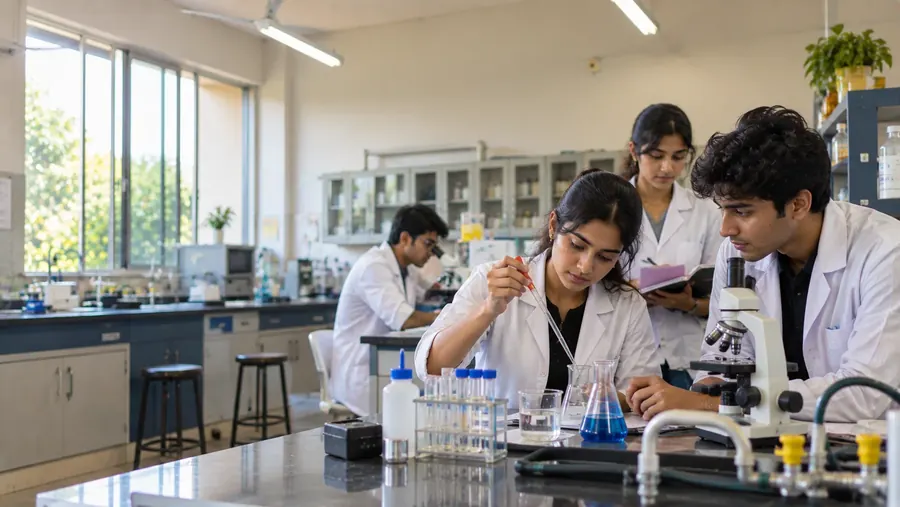
The Department of Chemistry offers a Bachelor of Science, Master of Science and Ph.D. program designed to equip students with both hard and soft skills, with a parallel focus on the underlying fundamental concepts. Our proficient faculty support the evolving needs of the next generation learners by engaging them in value-added courses, workshops and seminars and research projects. The program’s diverse curriculum covering Physical, Inorganic, Organic & Analytical Chemistry enables learners to tackle real-life problems with a focus on sustainability and environment. Graduates are well-prepared for careers in industry, research, and further studies. Our program employs interactive learning approach, integrating well-structured lectures, hands-on laboratory work and cutting-edge ICT tools. We foster active participation through engaging discussions and collaborative group activities, utilizing diverse assessment methods to map student progress. The emphasis is on cultivating strong problem-solving abilities, deep conceptual understanding, and practical laboratory skills.
- Department Department of Chemistry
- Category Postgraduate
- Programmes 3
Study here
Programmes & Eligibility
Bachelor of Science
Master of Science
Ph.D.
Every year
Department Events
1 March 2025
International Conference on Sustainability and Solutions — “A Blueprint of Planetary Sustainability at 2040”
Held at Jai Hind College, Mumbai. The event brought together policymakers, environmentalists, researchers, academicians, and industry leaders to discuss sustainable development solutions for a greener, more equitable future. 180 participants from various institutions; 33 oral presentations (Chemical sciences-14 and Biological sciences-19) and 54 poster presentations (Chemical sciences-17 and Biological sciences-37). Chief Guest: Dr. Rakesh Kumar (Ex-Director – CSIR-NEERI & Adjunct Professor – Centre for Environmental Science & Engineering, IIT Bombay); Keynote speaker: Mr. Nikhil Bhopale (Founder & Managing Trustee at Green Works Trust).
31 January 2026
National Conference EACSI-2026 — Elements in Action: Chemistry for Sustainability and Innovation
One-Day National Conference organised by the IQAC and the Department of Chemistry, held on the college campus at Churchgate. Plenary speakers: Padma Shri Prof. G. D. Yadav (National Science Chair, Government of India; Founding Vice Chancellor, ICT Mumbai), Prof. Sunil B. Bhagwat (Director, IISER Pune), Prof. B. M. Bhanage (Vice Chancellor, Maharaja Sayajirao University of Baroda) and Dr. Rajesh Thadani (President, Sind Educationists Association). 69 abstracts were accepted and published, of which 22 were delivered as oral presentations across four focused parallel tracks and 47 were presented in a poster session.
Upcoming events, seminars & conferences
February 5 & 6, 2027
International Conference — Molecular Frontiers: Translational Research in Global Landscape
Venue: Jai Hind College, Mumbai, India. Presented by Jai Hind College (Empowered Autonomous), Department of Chemistry. Abstract Submission Deadline: 6th December 2026. Registration Deadline: 24th December 2026. E-mail: chemistry.conference@jaihindcollege.edu.in. Contact: Prof. (Dr.) Sangeeta Parab: +91 9594541177; Dr. Shilpa Jain: +91 7738374870.
Highlights
More about the Department
Faculty of Science
Jai Hind College’s Faculty of Science, founded in 1948, combines a strong foundation in core scientific disciplines with modern programs such as Data Science, Biotechnology, Information Technology, and Big Data Analytics. The curriculum blends rigorous theory with industry-relevant skills, preparing graduates for careers in research, healthcare, technology, education, and industry. Research and experiential learning are central to the faculty’s mission: staff and students work on projects in nanotechnology, materials science, environmental chemistry, biotechnology, and computational sciences, producing publications, funded projects, and patents. Advanced laboratories, a Central Instrumentation Facility, internships, industry partnerships, and active scientific societies support hands-on training, innovation, and societal impact.
Conferences Journey Timeline
A blue print of planetary sustainability at 2040 — International conference on sustainability and solutions — Held on: 1st March 2025
One day international conference on Elements In Action: chemistry for sustainability and innovation — Held on: 31st January 2026
International Conference 2027 — Molecular Frontiers: Translational Research in Global Landscape
February 5 & 6, 2027 · Venue: Jai Hind College, Mumbai, India
Sub-themes
Green Chemistry — Design of environmentally benign chemicals and sustainable synthetic routes. Waste minimization and pollution prevention through green processes.
Catalysis — Catalyst design for efficient organic synthesis and environmental remediation. Catalysis for clean energy conversion and industrial applications.
Nanotechnology — Synthesis and functionalization of advanced nanomaterials. Nanomaterials for environmental and healthcare solutions.
Advanced Materials — Smart, functional, and multifunctional materials for emerging technologies. Polymers, composites, ceramics, and hybrid materials.
Environmental Chemistry — Water and wastewater treatment technologies. Air pollution control and environmental monitoring. Sustainable solutions for environmental protection and remediation.
Hydrogen Economy — Green hydrogen production and storage technologies. Fuel cells and hydrogen-based energy systems. Hydrogen as a pathway toward carbon neutrality.
Battery Technology — Advanced batteries for electric mobility and renewable energy storage. Sustainable battery recycling and lifecycle management.
AI in Chemistry — Artificial intelligence for molecular and materials discovery. Machine learning in reaction prediction and process optimization.
Sustainable Manufacturing — Cleaner production technologies and green industrial processes. Resource-efficient manufacturing and process intensification. Circular manufacturing and industrial decarbonization.
Computational Chemistry — Molecular modeling and quantum chemical simulations. Computational drug and catalyst design. Computational tools for understanding chemical systems.
Waste Valorization — Conversion of waste into fuels, chemicals, and functional materials. Biomass utilization and circular resource recovery. Sustainable technologies for waste-to-wealth applications.
Energy Materials — Materials for solar cells, fuel cells, and supercapacitors. Semiconductor materials for renewable energy conversion. Photocatalytic and thermoelectric materials.
Biocatalysis — Enzyme-based catalytic processes for green synthesis. Biotransformation for pharmaceutical and fine chemical production. Sustainable catalytic systems inspired by nature.
Circular Economy — Resource recovery, recycling, and sustainable material reuse. Circular design strategies for chemicals and materials. Waste reduction through innovative technologies. Building resilient and sustainable industrial ecosystems.
This conference aligns with the Sustainable Development Goals.
Plenary Speakers (Day 1)
Prof. Dr. John Warner (Monash University, Australia)
Dr. A.K. Tyagi (Homi Bhabha National Institute)
Padmashri Dr. D. Sivaram (Professor Emeritus and INSA Scientist, IISER Pune)
Sayan Bhattacharyya, PhD (IISER, Kolkata)
Prof. Dr. Ponnadurai Ramasami – Computational Chemistry Group, Department of Chemistry, University of Mauritius, Mauritius
Invited Speakers (Day 2)
Dr. Ajit Datar (Ramnarain Ruia College Mumbai)
Mr. Sujit Patil (Godrej Industries Group)
Dr. Sayan Bhattacharyya (IISER, Kolkata)
Prof. Aniruddha Pandit, Vice Chancellor (ICT, Mumbai)
Panelist Speakers
Dr. Anuradha Majumdar, Former Dean, Faculty of Science and Technology (University of Mumbai)
Advisory Committee Members
Padmashri Dr. D. Sivaram — Professor Emeritus and INSA Scientist, IISER Pune
Dr. Ajit Datar — Professor of Practice, Ramnarain Ruia College Mumbai
Mr. Sujit Patil — Godrej Industries Group
Prof. Aniruddha Pandit — ICT, Mumbai
Prof. Dr. John Warner — President and Chief Technology Officer, Technology Greenhouse, USA, Distinguished Professor of Green Chemistry, Monash University, Australia
Dr. Neetin Desai — Dean, Faculty of Science, Somaiya Vidyavihar University, Mumbai
Prof. Dr. Ponnadurai Ramasami — Computational Chemistry Group, Department of Chemistry, University of Mauritius, Mauritius
Dr. A.K. Tyagi — Dean and Senior Professor, Homi Bhabha National Institute (Deemed-to-be University, DAE)
Dr. Anuradha Majumdar — Former Dean, Faculty of Science and Technology, University of Mumbai
Suhas B. Naik – Satam — Chief Executive, National Centre for Science Communicators, Mumbai
Dr. D.V. Prabhu — Former Head, Department of Chemistry, Wilson College, Mumbai; President, Association of Chemistry Teachers (India)
Prof. Shivram S. Garje — Professor, Department of Chemistry, Dean of the Faculty of Science and Technology, I/C Director of the Garware Institute of Career Education and Development (GICED)
Dr. Pradip Pachfule — Associate Professor, Department of Chemical and Biological Sciences, S. N. Bose National Centre for Basic Sciences, JD Block, Salt Lake – Sector-III, Kolkata
Sayan Bhattacharya — Professor, Advanced Functional Materials Laboratory, Department of Chemical Sciences and Centre for Advanced Functional Materials (CAFM), Indian Institute of Science Education & Research (IISER) Kolkata
Prof. Samir Kulkarni — Tata Chemicals, Darbari Seth Distinguished Professor; Head: Department of Biological Sciences and Biotechnology; Coordinator: DBT-ICT Center for Biosciences, Institute of Chemical Technology
Dr. Deepti Kalsi — Assistant Professor, Department of Chemistry, Indian Institute of Technology Bombay
Deepa Khushalani, PhD — Chair – Department of Chemical Sciences, Professor in Materials Chemistry, Tata Institute of Fundamental Research (TIFR)
Prof. S.T. Maske — Director, ICT Marathwada Campus, Jalna; Dean, Research & Innovation; Professor of Polymer Technology, Institute of Chemical Technology (ICT)
Local Organising Committee
Chief Patron: Prof. (Dr.) Rajesh Thadani (President, Jai Hind College)
Patron: Prof. (Dr.) Vijay V. Dabholkar (Principal, Jai Hind College)
Convener: Prof. (Dr.) Sangeeta Parab (Vice Principal Science, HOD Chemistry)
Co-Convener: Dr. Shilpa Jain
Members: Dr. Shipra Biswas, Dr. Supriya Deshmukh, Dr. Sajith Chandran, Dr. Gokul Ganesan, Dr. Shilpa Jain, Dr. Aksh Hina Shaikh, Mr. Hitesh Thakur
Registration Fees (Indian Authors / Foreign Authors)
Undergraduate — ₹500 / $10
Post graduate — ₹750 / $18
Faculty — ₹2000 / $25
Industry — ₹5000 / $60
Foreign Delegates — ₹7500 / $80
Startup Display — ₹500 / $10
Who can Participate?
UG & PG Students; Ph.D. Scholars; Faculty Members; Researchers & Academicians; Industry personnel
Important Dates
Abstract Submission Deadline: 6th December 2026
Registration Deadline: 24th December 2026
Accommodation
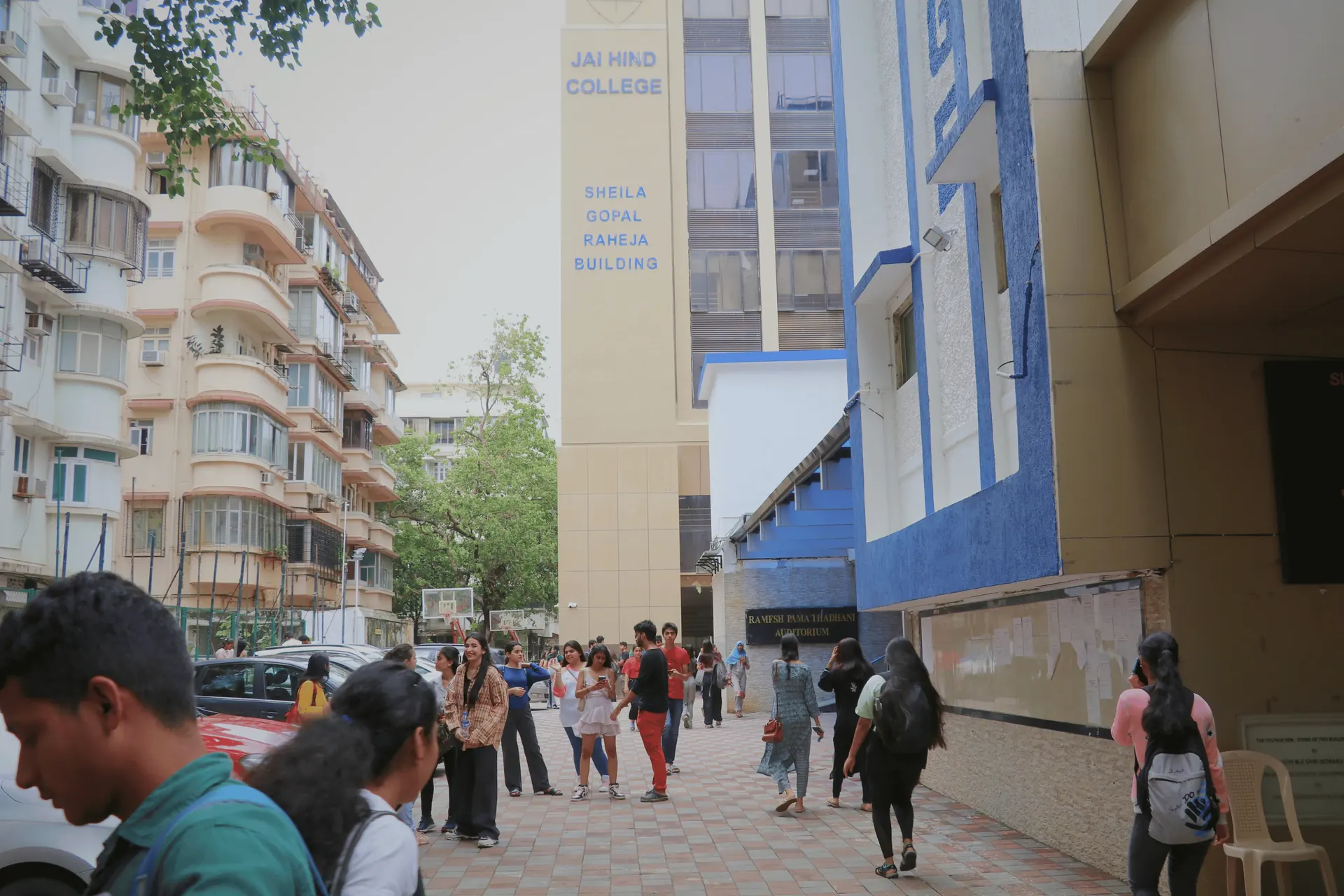
Participants are requested to make their own accommodation arrangements, preferably well in advance of the event. For ease of travel to Jai Hind College, Churchgate, accommodation may be considered in the following South Mumbai localities:
Churchgate: Closest to the venue and easily accessible on foot or by a short taxi ride (approx. 2–10 minutes). https://maps.app.goo.gl/GpiaqV85EdJWGoNU7
Marine Drive & Nariman Point: Scenic seafront locations with a range of premium hotels (approx. 5–15 minutes). https://maps.app.goo.gl/AX2yA9q3rhcd5NWr9
Colaba & Cuffe Parade: Popular tourist districts offering numerous accommodation options and dining choices (approx. 10–20 minutes). https://maps.app.goo.gl/RU1M3GkM8DttyKzH8
Fort & CSMT: Well-connected heritage and business districts with budget, mid-range, and premium hotels (approx. 10–20 minutes). https://maps.app.goo.gl/dAqkUGNiAfDN5D269
Marine Lines & Charni Road: Convenient locations with good connectivity and a variety of accommodation options (approx. 10–15 minutes). https://maps.app.goo.gl/GTUwxXGzY87i285N8
Reaching Jai Hind College
Jai Hind College is located approximately 21 km from the Domestic Airport (Terminal 1) and 25 km from the International Airport (Terminal 2). The most convenient and efficient way to reach the college is via Metro Line 3 (Aqua Line) to Churchgate Metro Station; from there, Jai Hind College is just a short walk or a 2–3 minute taxi ride away. Churchgate Railway Station is the nearest station and is only a 4-minute walk from the college campus. If arriving at Chhatrapati Shivaji Maharaj Terminus (CSMT), Jai Hind College is approximately 3 km away and can be reached in 10–15 minutes by taxi or app-based cab.
Contact
E-mail: chemistry.conference@jaihindcollege.edu.in
Prof. (Dr.) Sangeeta Parab: +91 9594541177
Dr. Shilpa Jain: +91 7738374870
EACSI-2026 — Elements in Action: Chemistry for Sustainability and Innovation (Conference Overview)
One-Day National Conference on 31 January 2026, organised by the IQAC and the Department of Chemistry.
Plenary Speakers
Padma Shri Prof. G. D. Yadav — National Science Chair, Government of India; Founding Vice Chancellor, ICT Mumbai
Prof. Sunil B. Bhagwat — Director, IISER Pune
Prof. B. M. Bhanage — Vice Chancellor, Maharaja Sayajirao University of Baroda
Dr. Rajesh Thadani — President, Sind Educationists Association
Overview
The One-Day National Conference Elements in Action: Chemistry for Sustainability and Innovation (EACSI-2026) was organised jointly by the Internal Quality Assurance Cell and the Department of Chemistry of Jai Hind College (Empowered Autonomous), Mumbai, and was held on the college campus at Churchgate on 31 January 2026. The conference was conceived around a single premise that chemistry, as the central science, occupies the point at which global sustainability goals and the frontiers of innovation meet. Its purpose was to move the conversation past laboratory demonstration and towards scalable application across renewable energy, green manufacturing, sustainable materials, climate action and the design of products with a minimal environmental footprint, by bringing researchers, industry practitioners, educators and students onto one platform for a day. In doing so it set itself four objectives namely, to highlight the role of chemistry in addressing sustainability challenges, to foster interdisciplinary collaboration across scientific domains, to showcase innovative technologies and materials, and to give young researchers a platform of their own. The theme of the conference was well aligned with seven of the United Nations Sustainable Development Goals, namely SDG 3, 4, 6, 7, 9, 12 and 13.
The scientific spine of the day was provided by four invited leaders from academia and science administration. Padma Shri Prof. G. D. Yadav, National Science Chair of the Government of India and Founding Vice Chancellor of the Institute of Chemical Technology, Mumbai, spoke from a career built on catalysis, green chemistry and reaction engineering, and on the shaping of national science policy. Prof. Sunil B. Bhagwat, Director of the Indian Institute of Science Education and Research, Pune, drew on biochemical engineering and enzyme technology and on the interface between science education, research and innovation. Prof. B. M. Bhanage, Vice Chancellor of the Maharaja Sayajirao University of Baroda, addressed catalysis, sustainable chemical transformation and the practical structuring of academia–industry collaboration. Dr. Rajesh Thadani, President of the Sind Educationists Association, framed the occasion institutionally, locating the conference within the college’s post-1948 legacy and drawing attention to the chemistry–biology interface through which molecules become metabolism and elemental cycles scale up to ecosystems.
Against this backdrop, 69 abstracts were accepted and published, of which 22 were delivered as oral presentations across four focused parallel tracks and 47 were presented in a dedicated sixty-minute poster session deliberately combined with the lunch break to maximise interaction, and assessed for the Best Poster Presentation awards. Across the four parallel tracks, the oral presentations mapped out four broad territories of contemporary sustainable chemistry. The first, on Green Synthesis and Functional Organic Materials, gathered work on sustainable synthetic methodology and the rational design of functional organic molecules, encompassing catalytic and regioselective C–H functionalisation strategies that reduce step count and waste, solvent-economical routes to complex scaffolds, and the structure–property engineering of donor–acceptor architectures for organic optoelectronics. The second, on Smart Materials for Energy and Environment, moved from the molecule to the device and the system, covering thin films and nanostructured oxides for optoelectronic and energy applications, composite and quantum-dot platforms for the electrochemical and fluorescent detection of pharmaceuticals and metal ions, and doped ferrite and metal oxide photocatalysts directed at wastewater treatment representing a body of work united by the attempt to tune composition and morphology towards sensing and remediation performance. The third, on Green Formulations and Sustainable Processes, was the most explicitly translational of the four, bridging bench research and industrial or clinical practice through biological and enzymatic routes to the degradation of plastics and endocrine-disrupting pollutants, engineered delivery systems, analytical method development for impurity control in pharmaceutical manufacture, and the extraction, formulation and stability assessment of plant-derived bioactives for nutritional and therapeutic use. The fourth, on AI and Computational Chemistry for Materials, cut across the other three, demonstrating how molecular modelling, docking and quantum chemical calculation now precede and guide synthesis, whether in identifying inhibitors of disease-relevant enzyme targets, in placing traditional medicinal formulations on a mechanistic footing, or in rationalising experimental observations. Taken together, the four tracks traced a coherent arc from synthetic method to functional material to deployable process, with computation threaded through each stage, and the deliberation that followed each session returned repeatedly to the same question the conference had posed at the outset.
The poster cohort, larger and more heterogeneous, fell into several recognisable clusters. The largest of these was green and biogenic nanomaterial synthesis, encompassing zinc oxide, copper oxide, zinc ferrite and nickel ferrite systems derived from renewable plant biomass. Running close behind it was a body of work on photocatalytic and adsorptive remediation, directed at methylene blue, basic fuchsin, other ionic dyes, hexavalent chromium, rifampicin and β-lactam antibiotics. A third cluster concerned fluorescent and optical chemosensors, taking in Betti bases, zinc oxide quantum dots, thiazole-based Schiff bases, Tris-based probes and nitrogen- and phosphorus-co-doped carbon dots for nitro-polyaromatic detection. A distinct computational cohort presented docking-based mutagenesis, phytochemical screening against molecular targets (acetylcholinesterase), and QSAR modelling for antioxidant activity. Circular economy and waste valorisation formed a further group, covering waste-based cultivation models for Pleurotus ostreatus, circular innovations from floral waste biomass, and activated carbon extracted from campus leaf litter for the treatment of laboratory waste. Beyond these, posters addressed energy storage through nickel cobaltite nanoflakes and yttrium metal–organic frameworks prepared in deep eutectic solvents; health and formulation through a herbal anti-acne serum, a UV-protective antiseptic lotion from natural extracts, nano-drug formulation for enhanced blood–brain barrier permeability, gold-nanoparticle-coated antibiotics against antimicrobial resistance, the evolution of monoclonal antibodies and the natural modulation of DPP-4 by seed bioactives; and food and public health analytics through heavy metal analysis in green leafy vegetables, antioxidant estimation across brands of black seed oil, a dynamic web tool for personalised nutrition management, and a menstrual hygiene and health indicator.
The composition of this body of work is as telling as its content. Abstracts came from approximately twenty distinct institutions. Beyond the host college, these included the Institute of Chemical Technology, Mumbai; the University of Mumbai through its Departments of Chemistry and Life Sciences, its Nanoscience and Nanotechnology centre and its Material Science Laboratory; the UM-DAE Centre for Excellence in Basic Sciences; Amity University Maharashtra; Dr. Homi Bhabha State University, Institute of Science; Sophia College for Women; St. Xavier’s College; K. J. Somaiya College; Kishinchand Chellaram College; SIES College; Ramniranjan Jhunjhunwala College; D. G. Ruparel College; Patkar-Varde College; Reena Mehta College, Bhayandar; Royal College, Mira Road; Changu Kana Thakur College, New Panvel; and Kavayitri Bahinabai Chaudhari North Maharashtra University, Jalgaon. Jai Hind College accounted for roughly thirty-two of the sixty-nine abstracts in its capacity as host, and Sophia College for Women for ten. Participation was not confined to academia as the Naval Materials Research Laboratory of the DRDO at Ambernath and the Directorate of Geology and Mining of the Government of Maharashtra at Nagpur appeared among the contributing affiliations, while the advisory panel and session chairs brought the pharmaceutical and energy sectors into the room alongside the National Academy of Sciences, India and the Bhabha Atomic Research Centre.
The conference’s scientific output, however, was not intended to close with the abstract volume. Full papers arising from the work presented and deliberated upon at EACSI-2026 have been invited for publication in a dedicated collection of the same name, Elements in Action: Chemistry for Sustainability and Innovation, hosted by Discover Chemistry, an open-access journal of Springer Nature (https://link.springer.com/collections/jjgcgaeafa). The collection is guest edited by Prof. Atul C. Chaskar of the Institute of Chemical Technology, Mumbai, together with Dr. Sajith Kumar Chandran and Dr. Gokul Ganesan of the Department of Chemistry, Jai Hind College, and remains open for submissions until 31 December 2026. Its scope deliberately mirrors that of the conference — green and sustainable chemistry, catalysis, advanced and functional materials, nanoscience, analytical and environmental chemistry, renewable energy systems, waste valorisation and sustainable process development, together with work at the interface of chemistry and biotechnology, pharmaceutical science, chemical engineering, data science and artificial intelligence — and it accepts original research articles, short communications and reviews. In extending the conference into a peer-reviewed, permanently citable and freely accessible record, the collection gives the discussions of 31 January a second and longer life, and offers the younger researchers among the presenters a route from a first poster to a first indexed publication.
For a one-day national conference convened on a single campus, the breadth of institutions, disciplines and career stages assembled is the clearest measure of what Elements in Action set out to do — to demonstrate that the elements of a sustainable future are worked out not in isolation but in combination.
Report on the International Conference on Sustainability and Solutions — A Blueprint of Planetary Sustainability at 2040 (1 March 2025)
Venue: Jai Hind College, Mumbai. Date: 1st March 2025.
Organising team
Programme Chair: Prof. Vijay V Dabholkar – Principal and Head (Department of Chemistry), Jai Hind College, Mumbai.
Chief coordinators: Prof. Sreela Dasgupta – Dean of Academic affairs, Prof. Sangeeta Parab – Vice Principal, Science.
Convenor: Dr. Supriya Deshmukh – Assistant Professor, Department of Chemistry.
Co-convenor: Dr. Sajith Kumar Chandran – Associate Professor, Department of Chemistry, Dr. Kruti Pandya – Assistant Professor & Joint Coordinator, Dr. Nissey Sunil – Assistant Professor & Joint Coordinator, Department of Biotechnology.
Members: Dr. Shipra Biswas – Assistant Professor, Department of Chemistry, Mr. Gokul Ganesan – Assistant Professor, Department of Chemistry, Dr. Shilpa Jain – Assistant Professor, Department of Chemistry, Dr. Aksh Hina Shaikh – Assistant Professor, Department of Chemistry, Dr. Onkar Lotlikar – Assistant Professor, Department of Chemistry, Dr. Monalisa Chakraborty – Assistant Professor, Department of Biotechnology, Ms. Vedika Bane – Assistant Professor, Department of Biotechnology, Ms. Khatija Atthar – Assistant Professor, Department of Chemistry, Ms. Ruqayya Manasawala – Assistant Professor, Department of Biotechnology.
Introduction
The International Conference on Sustainability and Solutions, titled “A Blueprint of Planetary Sustainability at 2040,” was held at Jai Hind College, Mumbai, on 1st March 2025. The event brought together policymakers, environmentalists, researchers, academicians, and industry leaders to discuss sustainable development solutions for a greener, more equitable future.
Conference Objectives
The conference aimed to: Address pressing environmental challenges and propose actionable solutions. Promote collaboration between academia, industry, and government for sustainable policies. Showcase innovative technologies and practices for a sustainable future. Create awareness and inspire youth participation in global sustainability initiatives.
Inaugural Session
The conference began with an inaugural session graced by Chief Guest, Dr. Rakesh Kumar (Ex-Director – CSIR-NEERI & Adjunct Professor – Centre for Environmental Science & Engineering, IIT Bombay), Keynote speaker, Mr. Nikhil Bhopale (Founder & Managing Trustee at Green Works Trust) and other esteemed dignitaries. The chief guest shared valuable insights on environmental innovation and conservation, the future of scientific innovations and the world view on environment management. As keynote speaker, Mr. Bhopale delivered an inspiring keynote address on Environment sustainability and conservation. The session set the tone for insightful discussions and knowledge-sharing.
Key Themes and Discussions
1. Climate Action: Experts discussed the urgent need for reducing greenhouse gas emissions and achieving carbon neutrality by 2040. Presentations highlighted advancements in renewable energy, sustainable transportation, and climate-resilient infrastructure.
2. Biodiversity Conservation and Ecosystem Restoration: The role of conservation efforts in preserving biodiversity and mitigating environmental degradation was emphasized. Case studies showcased successful models of afforestation, marine ecosystem restoration, and sustainable agricultural practices.
3. Circular Economy and Waste Management: Speakers explored strategies to minimize waste generation and transition towards a circular economy. Discussions included innovative recycling methods, biodegradable packaging, and sustainable manufacturing practices.
4. Social Equity and Sustainable Development Goals (SDGs): The importance of inclusive growth and equitable resource distribution was highlighted. Special focus was given to community-led sustainability initiatives and corporate social responsibility (CSR) programs aimed at achieving SDGs.
5. Technology and Innovation in Sustainability: Emerging technologies were examined for their potential in monitoring and enhancing sustainability efforts across various sectors.
Technical Sessions & Paper Presentations
The conference saw an overwhelming response, with 180 participants from various institutions. Several research papers were presented, contributing significantly to the academic and professional discourse. Some outstanding presentations were recognized and awarded. The conference featured multiple technical sessions, where experts and researchers presented their studies on topics across branches of Chemical Sciences and Biological Sciences. The conference witnessed 33 oral presentations (Chemical sciences-14 and Biological sciences-19). The conference hosted 54 poster presentations (Chemical sciences-17 and Biological sciences-37) across the streams which was appreciated by the delegates. It successfully paved the way for actionable strategies and reinforced the collective commitment towards a sustainable and resilient future by 2040.
The oral presentations and poster presentations were evaluated by eminent experts from the field. Their insights during chairing the sessions were important take ways for participants and organizers. The chemical sessions were chaired by Prof. Vishwanath R Patil (Director, Nanocentre for Nanosciences and Nanotechnology Professor-Physical chemistry, University Department of Chemistry, Kalina, Mumbai) and Prof. Manish Hate (Professor, Chemistry Department, Ruia College, Mumbai). The posters were evaluated by Prof. Suresh Pawar (Professor-Inorganic chemistry, University Department of Chemistry, Kalina, Mumbai). The oral presentations of Biological sciences were chaired by Prof. Indu Anna George (Professor, University Department of Lifesciences, Kalina, Mumbai). The poster presentations were evaluated by Prof. Antara Banerjee (Scientist C, NIRRH, ICMR, Parel, Mumbai) and Dr. Priya Sunderajan (Proffessor, Department of Lifesciences, St. Xaviers College, Mumbai).
Acknowledgments
The organizers extend gratitude to the esteemed speakers, participants, sponsors, and volunteers who contributed to the success of the conference. Their insights and dedication have enriched the discourse on planetary sustainability. This conference was a testament to the power of knowledge exchange and collective growth. As we move forward, let us apply the insights gained here to create a better future.
Ready to apply?
Admission routes, entrance exams, eligibility and fees are on the Admissions page.